
By Garrett Zhou

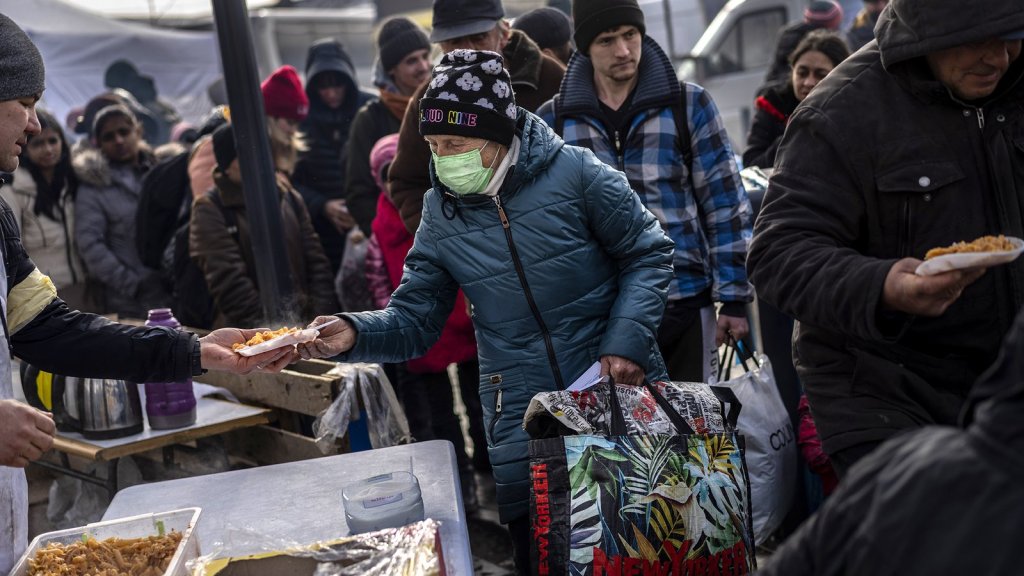
In a study conducted by researchers at Hamburg University, a bibliometric literature review was performed using a keyword search, which was subsequently refined. The researchers analyzed 631 peer-reviewed research papers from the Scopus Database to obtain results that demonstrated how conflict impacts food insecurity. Additionally, ten case studies were included to enhance the research and provide specific insights into the situation in Ukraine.
In this brief blog post, I will analyze the generalized findings that researchers obtained regarding food insecurity during times of conflict. This section of the study involved a review of 631 research papers to identify overarching trends. Below, I will paraphrase their results and explain the significance of each finding.
- Trade wars and international food trade barriers resulting from political conflicts contribute to food insecurity. Additionally, internal complications, such as domestic issues, play a significant role in exacerbating food insecurity.
Political conflicts can lead to trade wars and international barriers to food trade, ultimately resulting in food insecurity. However, the issue is not limited to international conflicts; domestic strife can also contribute significantly to food insecurity. Therefore, addressing food insecurity requires more than merely resolving conflicts. It is challenging to eliminate all domestic strife, as it often diverts government funding away from initiatives aimed at reducing inequality.
- Food insecurity during conflicts can have long-term effects, particularly on women, children, and soldiers.
Conflicts disproportionately impact women, children, and soldiers due to the destruction of agriculture and infrastructure. This devastation results in a significant reduction in overall food availability, with much of the limited food supply often prioritized for service members on the front lines. It is understandable that soldiers receive this priority, as they are actively engaged in combat. However, delivering food to them becomes increasingly challenging when resources are scarce.
- Conflicts have the most severe impact on developing countries. This is primarily due to their agriculture-driven economies. When conflict occurs, farmers often abandon their land until the situation stabilizes, resulting in widespread food shortages.
This is a logical observation. Developing countries often struggle with inadequate infrastructure, which results in their economies being heavily reliant on agriculture. However, when conflict arises, these nations typically lack advanced military technology, necessitating the recruitment of personnel for the military. Consequently, farmers may be drafted, leading to the abandonment of farmland and a decrease in harvests at a time when food production is critically needed. Additionally, this shift is motivated by safety concerns, as working in open fields during wartime can be extremely hazardous.
- Weapons utilized in war zones can cause long-lasting soil pollution, particularly from biological weapons. These can introduce heavy metals and potentially nuclear waste into agricultural land. Furthermore, there is a clear correlation between the types of weapons employed and the contamination of food sources.
This poses a significant risk to farmers in conflict zones. The use and detonation of weapons can lead to soil pollution, making it highly probable that the contaminated areas will remain unusable for many years due to the presence of heavy metals and nuclear waste associated with these weapons. Additionally, weapons can contaminate food sources, further diminishing the food supply in countries affected by conflict.
- Conflicts are not solely international issues. Low wages and poverty in many countries compel farmers to enlist in the military, resulting in a lack of individuals to cultivate the fields. Furthermore, a conflict—especially one occurring in a neighboring country—can devastate the economy and destabilize the government, leading to increased prices due to food shortages.
The military often offers higher pay compared to farming in many instances. Farmers require financial resources to purchase tools and support their families, which leads them to seek employment in better-paying jobs. Particularly during times of war, a shortage of farmers can have a devastating impact on a country’s food supply, resulting in food insecurity.
In conclusion, conflicts can significantly impact food insecurity in various ways. In countries experiencing conflict, the use of weapons can contaminate food sources and render soil unusable. Furthermore, developing nations and poorer countries are disproportionately affected, as they often lack the necessary resources to support farmers in their fields. Domestic politics and internal strife also play a crucial role in food insecurity; for instance, insufficient funding for the government’s agricultural sector can independently trigger a food crisis. Ultimately, conflict is a major contributor to the escalating food crisis worldwide, so let us all prioritize safety.
Have a great day, and, as always, thank you for reading.
Cited Works
Filho, Walter Leal, et al. “How the War in Ukraine Affects Food Security.”
National Library of Medicine, PubMed Central, 31 Oct. 2023, pmc.ncbi.nlm.nih.gov/articles/PMC10648107/#:~:text=The%20war%20has%20significantly%20disrupted,the%2022nd%20of%20July%202022. Accessed 24 Feb. 2025
McCarthy, Joe. “How Russia’s Invasion of Ukraine Could Force 500 Million People
into Acute Hunger.” Global Citizen, 10 Mar. 2022, http://www.globalcitizen.org/en/content/ukraine-russia-conflict-hunger-food-insecurity/. Accessed 24 Feb. 2025.


Leave a Reply