
Food Insecurity Crisis Spotlight: Ukraine
By Garrett Zhou

In a study conducted by researchers at Hamburg University, a bibliometric literature review was performed using an initial keyword search, which was subsequently refined. The researchers analyzed 631 peer-reviewed research papers from the Scopus database to obtain results that illustrate how conflict affects food insecurity. Additionally, ten case studies were included to enrich the research and provide specific insights into the situation in Ukraine.
In this brief blog post, I will analyze the findings obtained by researchers regarding food insecurity during the Russia- Ukraine war. The paper examines the effects of the conflict on global supply chains, and I will paraphrase those findings for you here.
The war in Ukraine has been catastrophic, resulting in the deaths of over half a million people and profoundly impacting the lives of countless others. This situation allows us to examine the ramifications of this devastating conflict, particularly through the lens of food insecurity.
On July 17, 2023, UN Secretary-General António Guterres stated, “The production and availability of food is being disrupted by conflict, climate change, energy prices and more”.
Food security (FS) is defined as follows: “A situation that exists when all people, at all times, have physical, social, and economic access to sufficient, safe, and nutritious food that meets their dietary needs and food preferences for an active and healthy life.”
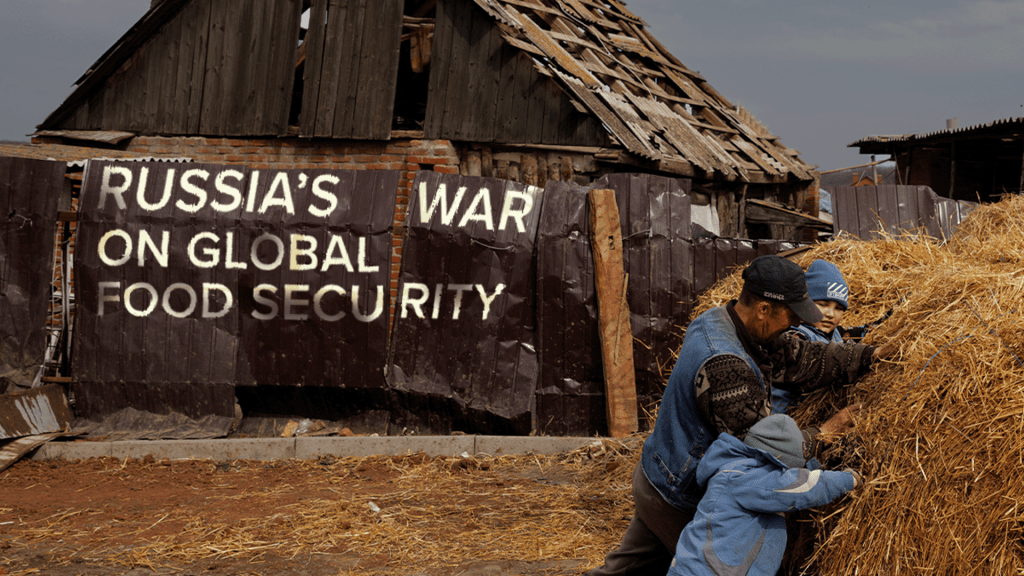
The war in Ukraine has caused significant disruptions to the global food supply. Ukraine produces 20% of the world’s wheat, leading to skyrocketing wheat prices since the onset of the conflict. Additionally, Ukraine accounts for 10% of the world’s corn supply and 45% of the global sunflower supply, indicating that the war has also profoundly affected the supply chains for these crops.
The largest importers of wheat from Ukraine include Egypt, Indonesia, Turkey, Pakistan, Bangladesh, Tunisia, Morocco, Yemen, Lebanon, and the Philippines. These nations are not particularly affluent; in fact, many of them are often classified as “Third-World Countries”, which means that sourcing essential wheat shipments from countries other than Ukraine would increase costs and negatively impact their economies. As a result of these rising prices, the aforementioned countries are compelled to reduce their wheat imports, exacerbating food insecurity. This issue extends to other regions as well. One-third of the cereal supply in North Africa and the Middle East is sourced from Ukraine, and the same holds for East Africa, where 45% of its cereal supply is derived from Ukrainian exports. Vulnerable countries such as Libya, Pakistan, Yemen, and Lebanon rely on Ukraine for 30% of their wheat imports, highlighting that a significant portion of their populations faces food insecurity. These regions have been severely affected, which is particularly concerning given that the national governments of these countries cannot afford to procure food from alternative sources, leading to widespread hunger.
The war erupted at a critical juncture, coinciding with a significant increase in Ukraine’s trade with the European Union. In 2021, Ukrainian farmers achieved the largest harvest in agricultural history, resulting in a 50% increase in exports to the EU. This shift enabled the EU to reduce its reliance on trade with Russia and China in favor of partnerships with Ukraine, benefiting both Ukrainian producers and the European Union. However, it is possibly even more important to remember that the pre-invasion status quo of food insecurity was gradually improving. The COVID-19 pandemic had a profound impact on the global food crisis; in 2020, approximately one-third of the world’s population, or 2.37 billion people, lacked access to adequate food. The world, still reeling from the pandemic, was in the process of recovery and lacked the resilience needed to withstand another disaster. The war in Ukraine has come at an inopportune time for the global community, and people around the world are bearing the consequences.
Now, let’s examine the findings of researchers regarding global crop prices. Over the course of one year, the Agricultural Price Index—a measure of agricultural value—rose by 34%. This increase indicates that consumers would need to pay, on average, 34% more for crops. Specifically, the Agricultural Price Indexes for wheat and corn, the crops most impacted by the war, increased by 42% and 47%, respectively. The ongoing conflict in Ukraine is likely to keep crop prices at historically high levels for the foreseeable future, especially given that President Putin shows no inclination to end the war. While former President Trump may have the potential to address the situation, it remains uncertain. Recent tensions, highlighted by a heated exchange in the Oval Office, suggest that U.S.-Ukraine relations are strained, and the war is likely to persist as Trump appears to be more focused on domestic issues.
Of the many challenges that countries face during wartime, Ukraine’s agricultural industry encounters several specific issues. The primary challenge for Ukraine is shipping through the Black Sea. Continuous shelling and missile strikes hindered ships from safely departing the harbor. This situation complicates the transportation of goods to distant regions in need, such as the Middle East and Africa. Additionally, the war has introduced numerous other challenges to Ukraine’s agricultural sector. For instance, reduced labor availability and limited access to essential inputs like fuel and fertilizer, along with damaged farm equipment and safety concerns, make it increasingly difficult to secure a successful harvest. Fuel and fertilizer have been conserved to bolster the war effort. As I mentioned in my previous blog post, many farmers abandon their fields during times of conflict to enlist, primarily because the pay is better. Consequently, a significant number of Ukrainian farmers have left their fields, resulting in a substantial decline in total crop yield. In fact, considering these challenges, experts estimate that Ukraine’s agricultural production may decrease by 25-50% over the next few years.
The war in Ukraine is directly responsible for unprecedented levels of food insecurity. Currently, 47 million people are experiencing acute food insecurity, placing them at a high risk of starvation. Furthermore, the ongoing conflict in Ukraine could exacerbate the food crisis, as 36 out of the 55 countries classified as already facing a food crisis rely on exports from Ukraine. Without these exports, these nations will need to source food from alternative suppliers, potentially driving up prices. According to leading analytical models, the war in Ukraine is expected to push an additional 23 million people into food insecurity. This indicates that the conflict has increased global food insecurity by 1%, a significant figure considering that 2.33 million people are already grappling with food insecurity, many of whom reside in regions most severely affected by the decline of Ukrainian agriculture.
Conclusions
The war in Ukraine is not only driving up food prices domestically but also affecting the entire world. If the conflict persists, it could severely disrupt supply chains and food systems. Enhanced food insecurity policies must be implemented to ensure that, in the event of a global conflict, there are no lasting repercussions. The Ukrainian government needs to take decisive action to end the war as swiftly as possible and to better safeguard its agricultural industry against future conflicts.
Thank you for reading, and as always, have a great day.
Sources
Filho, Walter Leal, et al. “How the War in Ukraine Affects Food Security.” Foods, vol. 12, no. 21, Multidisciplinary Digital Publishing Institute, Oct. 2023, pp. 3996–96, https://doi.org/10.3390/foods12213996. Accessed 3 Feb. 2025.
Hoefer, Adrian. “Russia’s War on Global Food Security – Atlantic Council.” Atlantic Council, June 2022, http://www.atlanticcouncil.org/in-depth-research-reports/issue-brief/russias-war-on-global-food-security/. Accessed 11 Mar. 2025.


Leave a Reply