
By Garrett Zhou
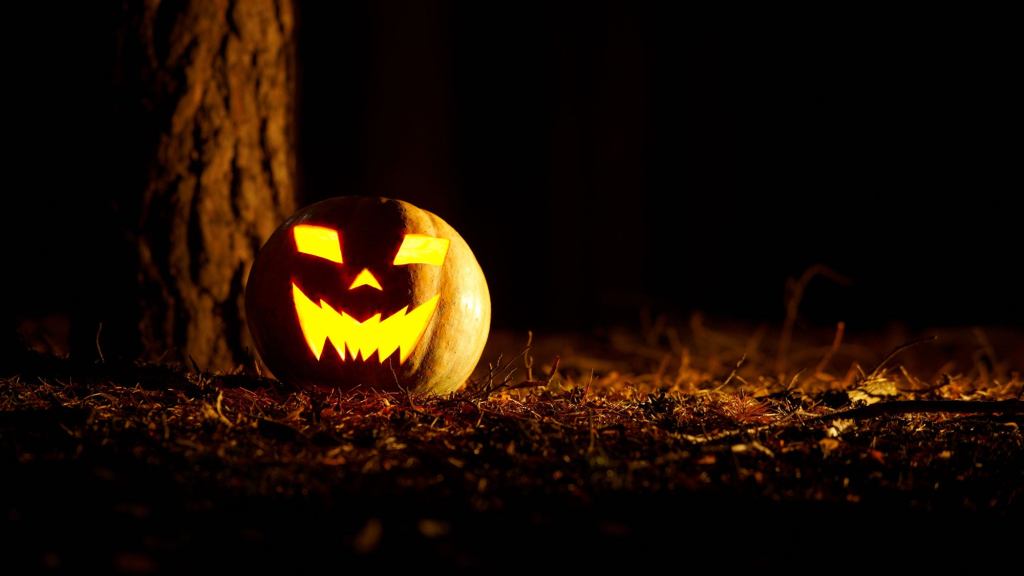
Hey everyone, it’s Garrett again, here with another blog post. Today, the topic, albeit a little late, is Halloween. Now, you might be wondering, “What in the world does Halloween have to do with food insecurity?” The connection is larger than you think, I promise you that. It shocked me when I was researching it. If you think about it, candy is not a naturally occurring food. It is processed and made with many different foods and artificial flavors. These won’t provide the necessary nutrients for optimal health. Then there are the cavities. And the parties. Sometimes, food banks even get looted. When you think about it now, it’s not so far of a stretch, is it? Sit back, relax and buckle up for some SPOOKY, shocking facts about Halloween.
“Candy is not good for you.” You’ve heard that statement over 1000 times. But why isn’t candy good for you? Well, first off, it doesn’t provide any nutritional value. No iron, no potassium, no protein, no complex carbs. It’s sugar, artificial flavors, and food dyes loaded with preservatives. You can survive off of many foods like beef, chicken, beans, etc. However, you cannot survive solely off candy. It’s simply empty calories that will drag you farther and farther away from your goals. An estimated 600 million pounds of candy and 300,000 tons of sugar (Perino). The average American child consumes 3.4 pounds of candy around Halloween, which equates to about 3 full cups of sugar (Quillen). This is 7000 calories! 7000 empty calories with no nutritional value, going into your body, making you fat. I hypothesize that Halloween is a major contributor to child obesity since Halloween spurs a child’s love of candy in the first place.
Secondly, candy has a lot of artificial sugars. I will be the first one to argue that the natural sugars obtained from fruits like grapes and oranges are good for you, or at least not detrimental for your health. However, the sugars in candy are not the same sugars in these fruits. It’s like when you buy soda at the store and the label says “1% Fruit Juice”. The sugars in candy are similar to high-fructose corn syrup, and they are not good for you at all because the overload in sugars can cause liver inflammation and diabetes.
Cavities are another huge issue stemming from the huge amounts of sugar consumption during Halloween. While there is no exact figure for how many cavities are caused due to Halloween, it has been reported that candy-related dental issues have impacted over 35% of Americans (Penn Dental). I would imagine that a good chunk of these are caused by Halloween, meaning Halloween is detrimental to the dental health of millions of children in the US.
For the high schoolers, the parties also have a major impact on food insecurity. A lot of alcohol is consumed during these parties, and alcohol triggers hunger signals in the brain, leading to increased craving and more obesity (Alcohol). This consumption, especially in needy households, can lead to hunger and overspending, which simply drains resources from the rest of the community.
Finally, here is the biggest impact of them all. Like I said, an estimated 600 million pounds of candy and 300,000 tons of sugar. About 44% of all candy bought this Halloween was chocolate (Fountain). This means that about 264 million pounds of chocolate was bought for Halloween alone in 2025. However, chocolate production has some major flaws, some of which involve human rights abuses of the workers. About 70% of all cocoa beans are found in the Ivory Coast and Ghana, with 2 million children being forced to work in this industry. The children, whose parents need the money, lie about their age to the overseeing farmers, with some being as young as 5 years old. The farmers, who earn less than $1 a day, must use these child laborers in order to keep their prices competitive (Braga). You may have heard Mr. Beast discuss the issue in some of his videos, and he’s right. The chocolate market is a nasty one, and reform will take a long time. And, by buying and eating all of this chocolate, we are simply spurring the need for more child labor on cocoa farms.
Hopefully, I’ve shown you how Halloween can be detrimental to hunger worldwide, even if some of the connections were a bit ridiculous. Always remember that being aware of your actions is the first step to a hunger-free world, even if it doesn’t do much overall. All these little actions lead to a Better Tomorrow. As always, thanks for reading, and see you next time.
Bibliography
Perino, Merissa. “15 mind-blowing facts about Halloween candy consumption in the
US.” Business Insider, 22 Oct. 2019, http://www.businessinsider.com/
halloween-candy-consumption-usa-facts-statistics-2019-10. Accessed 2 Dec.
2025.
Quillen, Alanna. “What’s scarier than spooky costumes? The amount of sugar we
eat on Halloween.” NBCDFW, 31 Oct. 2024, http://www.nbcdfw.com/news/health/
whats-scarier-than-spooky-costumes-the-amount-of-sugar-we-eat-on-halloween/
3685414/. Accessed 2 Dec. 2025.
Fountain, Luke. “Chocolate’s reign over Halloween is under threat from
inflation, tariffs and high cocoa prices.” CNBC, 31 Oct. 2025, http://www.cnbc.com/
2025/10/31/
chocolate-prices-halloween-tariffs-inflation-candy.html#:~:text=Chocolate%20price
s%20have%20surged%20nearly,44%25%2C%20according%20to%20Circana. Accessed 2
Dec. 2025.
Braga, Arianna. “The dark side of chocolate: child labour in the cocoa
industry.” Humanium, 20 Aug. 2024, http://www.humanium.org/en/
the-dark-side-of-chocolate-child-labour-in-the-cocoa-industry/. Accessed 2
Dec. 2025.
“Halloween Candy and Dental Health: Myth or Mischief?” Penn Dental Family
Practice, 2 Oct. 2024, mypenndentist.org/dental-tips/2024/10/02/
halloween-candy-and-dental-health/. Accessed 2 Dec. 2025.
“Alcohol and nutrition.” AlcoholThinkAgain, alcoholthinkagain.com.au/
alcohol-and-your-health/long-term-health-effects/alcohol-and-nutrition.
Accessed 2 Dec. 2025.


Leave a Reply