
By Garrett Zhou
If I asked you whether hunger in America was higher during the pandemic or after it, you’d probably say during. Millions died, the world essentially shut down, and many businesses consequently closed shop. However, that’s not actually the case.
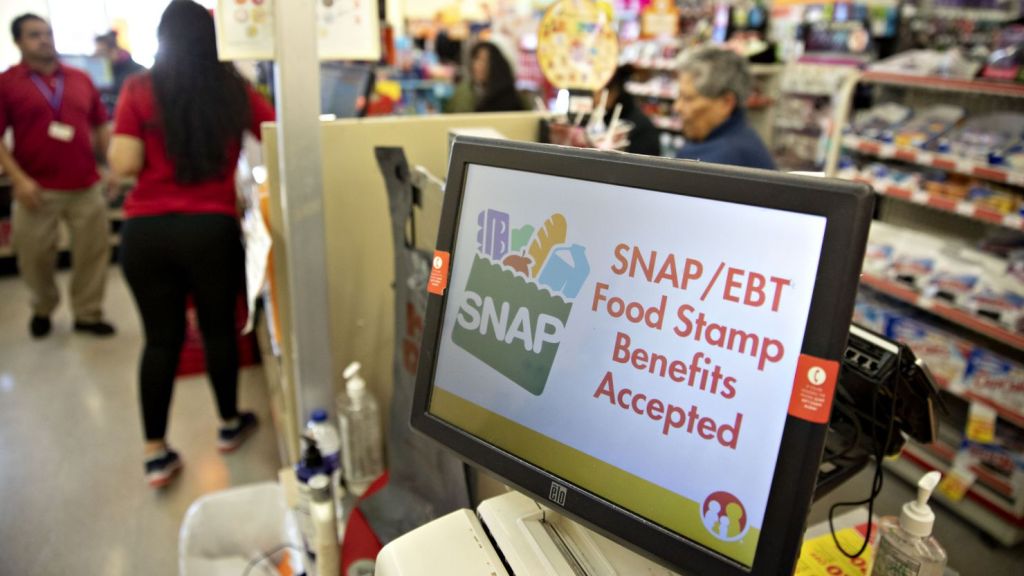
During the Pandemic (2019 – 2023), the federal government temporarily created or expanded programs that significantly reduced food insecurity around the country, targeting children and low-income families. The majority of these programs have now expired or are about to expire in the near future. Some of these programs included: universal free school meals in most counties, emergency SNAP allotments (ironically), pandemic EBT (P-EBT) for children who relied on school meals, expanded child credit tax (CTC) in 2021, and extra funding for food banks and emergency food providers in most communities. By 2024 / 2025, nearly all of these supports were gone.
After this aid ended, which was post-pandemic, many significant repercussions were experienced around the country. Overall, we saw food insecurity spike. After the expanded Child Credit Tax ended, child food insecurity rose sharply within months. Additionally, food banks reported higher demand now compared to the pandemic era, even though unemployment is lower now. The effect wasn’t just felt in households; it was felt where students and children should feel most secure: school. When universal free meals ended in schools, meal participation dropped, lunch debt reappeared in many districts, and children from low-income households faced more stigmatization.
The back-up plans for individuals who needed some help, food banks and emergency food distributors, were designed as short-term back-ups, not replacements for federal aid. Therefore, these systems became overwhelmed with needy individuals. Many food banks reported a shortage of volunteers, rising operational costs, and most importantly, difficulty meeting increasing community demand. They became flooded with requests, and they couldn’t match up.
This led to the ever-familiar tradeoff situation. Without the pandemic-era aid coming in, families must choose between putting food on the table and rent, utilities, and medical expenses. For many in the upper class, this situation has never come into fruition. However, for those working paycheck to paycheck, this scenario isn’t unique; it’s everyday.
So, what can we take away from this situation? Well, we now know that the government can significantly affect food insecurity. It goes both ways. We can decrease hunger, but we can also increase it with incorrect policy implementations. We can solve food insecurity; it’s not inevitable. It needs to get solved for a Better Tomorrow.
As always, thanks for watching, and I’ll see you next time.
Bibliography
U.S. Department of Agriculture, Economic Research Service. Household Food Security in the United States. U.S. Department of Agriculture, http://www.ers.usda.gov/topics/food-nutrition-assistance/food-security-in-the-u-s/
. Accessed 30 Dec. 2025.
U.S. Census Bureau. Household Pulse Survey: Food Sufficiency. U.S. Census Bureau, http://www.census.gov/data-tools/demo/hhp/#/
. Accessed 26 Dec. 2025.
Government Accountability Office. COVID-19: USDA Pandemic Assistance for Food and Nutrition. GAO, http://www.gao.gov/products/gao-23-105655
. Accessed 25 Dec. 2025.
Center on Budget and Policy Priorities. Policy Basics: SNAP and Food Assistance. CBPP, http://www.cbpp.org/research/food-assistance
. Accessed 25 Dec. 2025.
Urban Institute. Tracking the COVID-19 Recession’s Effects on Food Hardship. Urban Institute, http://www.urban.org/features/tracking-covid-19-recessions-effects-food-hardship
. Accessed 29 Dec. 2025.
Feeding America. The Impact of the End of Pandemic-Era SNAP Benefits. Feeding America, http://www.feedingamerica.org/hunger-in-america/impact-of-pandemic-era-snap-changes
. Accessed 28 Dec. 2025.
Food Research & Action Center. School Meals During and After the Pandemic. FRAC, frac.org/research-resource/school-meals-pandemic. Accessed 27 Dec. 2025.


Leave a Reply