
By Garrett Zhou
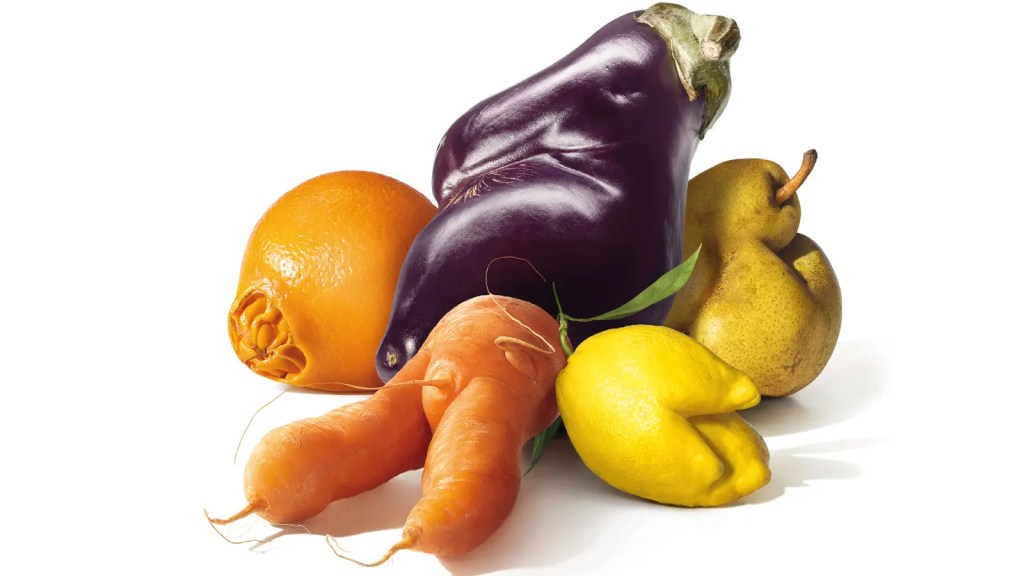
If you’ve been a consistent reader on my blog, you would know that food waste is a huge problem, and that households actually create 61% of the food waste worldwide(Diana et al). In my previous post, I talked about simple ways for households to reduce food waste. These methods included better storage techniques, less impulse purchases, and composting wasted food. Now, I want to go further up the chain and get to supermarkets. I’ll discuss an issue you probably have never heard of before, yet causes over 20% of all produce coming fresh off the farm to get thrown away: “Ugly Produce.”
It might be hard to believe, but supermarkets throw away over 20% of the fresh produce they recieve from farms just because of how it looks(“Why we waste”). In 2021, world produce reached 9.5 billion tonnes, meaning almost 2 billion tonnes of that produce is thrown out before hitting the shelves because of their looks(FAO). This produce could feed millions of families around the world.
There is also an economic upside to accepting ‘ugly produce’. With the crazy amount of food being wasted, lots of greenhouse gasses are being emitted. In fact, Berkeley confirms that wasted food is the third-largest greenhouse gas emitter behind China and the US. By removing a prominent contributor to climate change, expenses would decrease.
However, there is nuance to be taken from this situation. While it may seem beneficial for companies like The Imperfect Foods Company to sell ‘ugly produce’, food banks argue that companies like The Imperfect Foods Company detract from the amount of donations received. Many non-profits claimed that imperfect foods aren’t being wasted, but rather being used for products that don’t need to be aesthetically pleasing like applesauce and shredded carrots(BER).
To really get a good perspective on the issue, farmers were interviews. While they had many conflicting opinions about companies like The Imperfect Foods Company, many support their mission because it puts more money in their pockets. The wasted food wasn’t going to financially support the farmers, and since these companies are buying the imperfect produce, it was financially beneficial(BER).
Even then, there were downsides. Companies that have claimed to be looking out for the interests of the farmers have admitted to partnering with large corporations such as Dole, which take away business from smaller farms, forcing a number of them to shut down. This is counter-intuitive; how can these small companies help farmers if they work for the systems that are shutting them down(BER)?
So, what is the conclusion? Obviously, cosmetics shouldn’t be contributing to food waste, but it is. What about the companies selling imperfect produce? As a person who has volunteered numerous hours at food banks, much of the produce they get is directly from farms and is imperfect. Therefore, I believe the narrative that these corporations are possibly taking away from charitable organizations. Even if they aren’t, lots are partnering with large corporations that actively take business away from farmers, exacerbating the issue. My conclusion? Don’t boycott these companies, but don’t treat them like messiahs either. I leave you a quote from Berkeley’s Economic Review: “Food waste isn’t a simple problem; it’s an example of the broken agricultural system’s inability to distribute resources in a way that benefits all consumers.”


Leave a Reply